
If you’re asking, “what size mini split do I need?” you’re not alone. It’s the first question most homeowners in Ann Arbor, Saline, and nearby areas ask when they look at ductless systems.
Size matters. Too small, and the unit runs all the time but never keeps up. Too large, and it short cycles. That wastes energy and wears out parts faster.
Here’s how mini-split sizing works, what different sizes are used for, and how to make the right choice for your Michigan home or business.
Mini-splits are sized by BTUs—British Thermal Units. That number tells you how much heating or cooling the system can deliver per hour.
Common residential sizes include:
The higher the BTU, the larger the space it can handle.
But square footage alone doesn’t give the full answer.
As a starting point:
This is a rough guide. It works for average ceiling heights and average insulation. Michigan homes are not always average.
That’s why the real answer to “what size mini split do I need” depends on more than square footage.
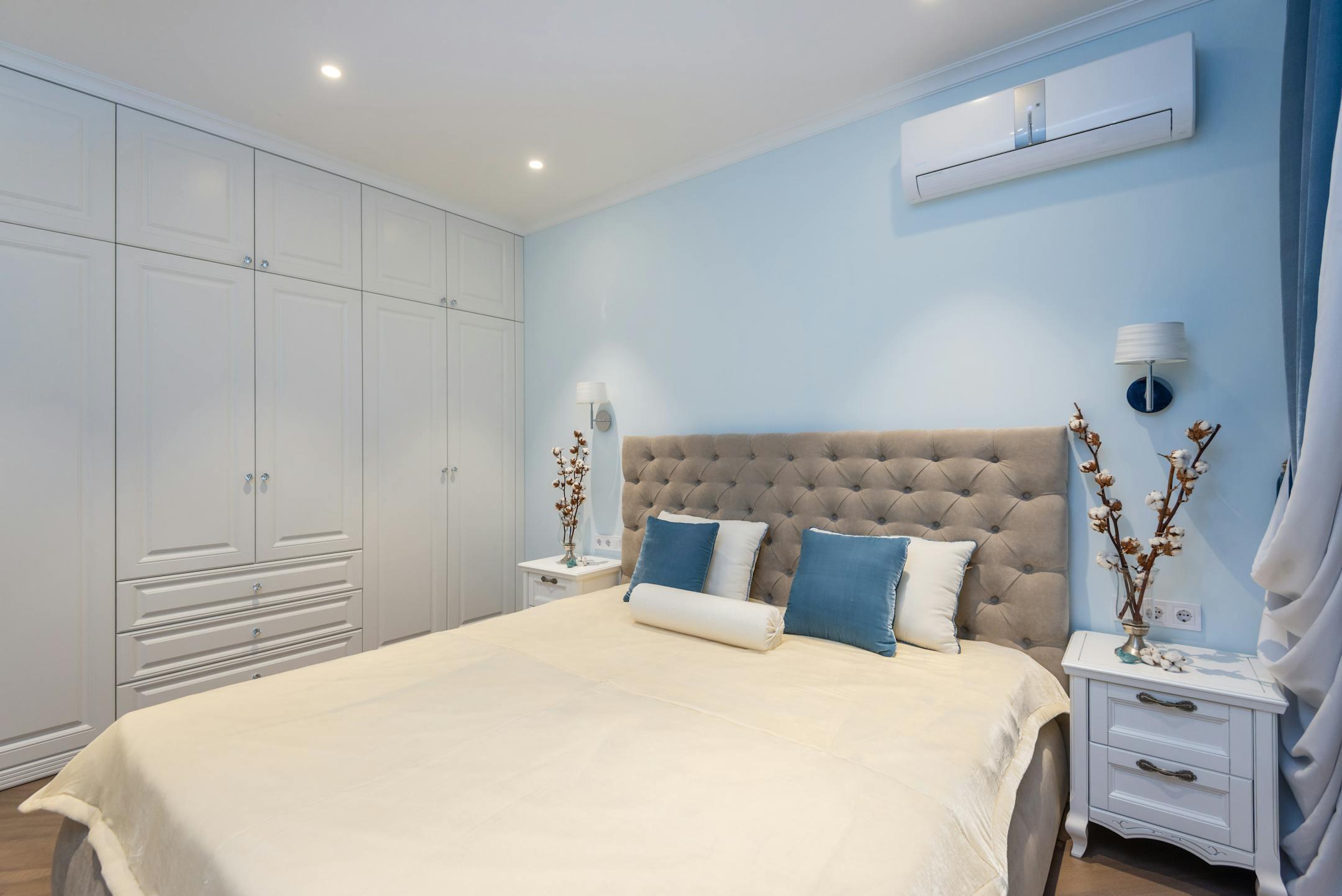
Most bedrooms in Ann Arbor and Saline range from 120 to 250 square feet.
In many cases:
If the room sits over a garage, has large windows, or faces strong afternoon sun, it may need the higher size.
For older homes with less insulation, we often see better results with slightly more capacity.
Living rooms are often 300 to 600 square feet. They also tend to have:
For these spaces:
If your living room flows into a dining room and kitchen with no doors, you may need to size for the full open area, not just the seating space.
Michigan basements stay cooler than upper floors. That affects sizing.
A finished basement between 600 and 1,000 square feet often works well with:
Basements don’t deal with as much sun, but they do need steady heating in winter. A properly sized heat pump mini-split keeps the space comfortable year-round without running constantly.
If the basement is divided into separate rooms, a multi-zone system may make more sense.
Garages are tricky. They often have:
For a two-car garage (around 400–600 sq. ft.):
But insulation matters more here than square footage. An uninsulated garage needs more capacity. A well-insulated workshop needs less.
If you plan to heat the space through Michigan winters, sizing must account for low outdoor temperatures. Not all mini-splits perform the same in cold weather. Proper equipment selection is part of the process.
For offices, retail spaces, or small commercial areas, the math changes.
You must consider:
A 1,200 sq. ft. office with computers and steady foot traffic needs more cooling than a quiet storage space of the same size.
This is where a load calculation becomes important. Guessing leads to uneven comfort and higher energy bills.
Many people assume bigger is safer. It’s not.
An oversized mini-split:
In summer, humidity control matters as much as temperature. Short cycling leaves the air damp. Your home feels sticky even if the thermostat reads the right number.
Proper sizing avoids this.
An undersized system runs constantly. It struggles during peak heat in July or cold snaps in January.
That means:
When someone asks, “what size mini split do I need,” the real goal is balance. You want steady, efficient operation.
Square footage is just one factor. In our area, we also look at:
Older homes in Ann Arbor often have different insulation levels than newer builds in Saline. That changes the load.
A proper Manual J load calculation gives the most accurate answer. It measures the actual heating and cooling demand of your space.
If you’re conditioning one room, a single-zone mini-split works well.
If you want to heat and cool several rooms independently, a multi-zone system connects multiple indoor units to one outdoor unit.
Sizing here involves:
You don’t just add up square footage and pick a number. Each zone must match the room it serves.
Online charts help. But they don’t replace an in-person evaluation.
A proper estimate includes:
At Lashbrook Mechanical, we’ve worked on heating and cooling systems across Michigan for 13 years. We’ve seen what works in older homes, new builds, basements, garages, and small businesses.
Our job is simple. Size the system correctly. Install it properly. Make sure it runs the way it should.
If you’re still wondering, “what size mini split do i need,” the next step is straightforward.
Schedule an estimate. We’ll evaluate your space and give you a clear answer. No guesswork. No oversizing. No shortcuts.
You can book service directly here. Choose a time that works for you.
The right size mini-split keeps your home comfortable in July and January. And it runs the way it’s supposed to.
That’s the goal.